
TDS - Tower Destiny Survive
SayGames LtdAction
4.46.86K Reviews
- Version
- 1.15.0
- Installs
- 10.00M
- Age Rating
- Everyone 10+
Screenshots
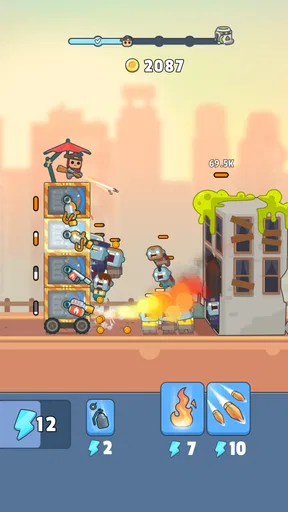
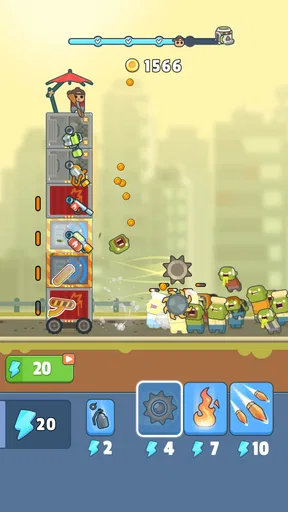
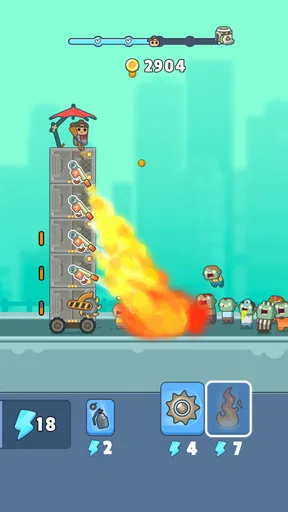
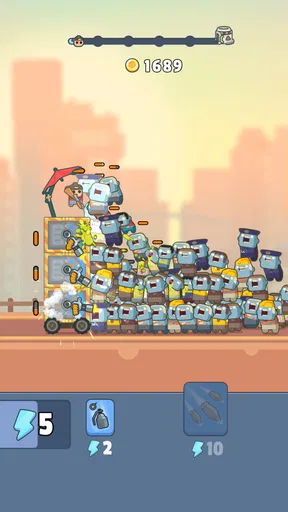
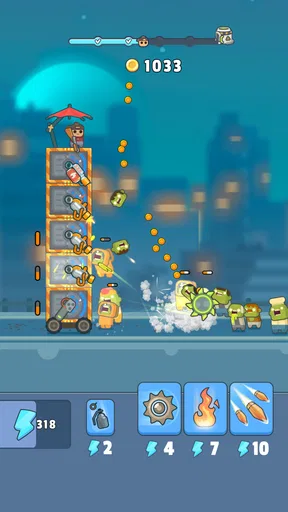
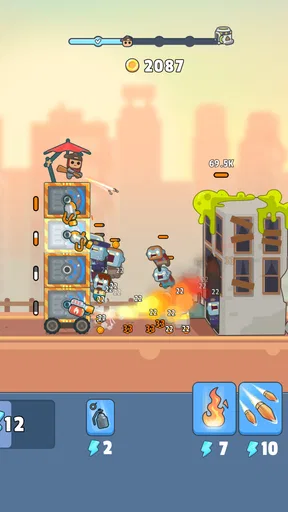
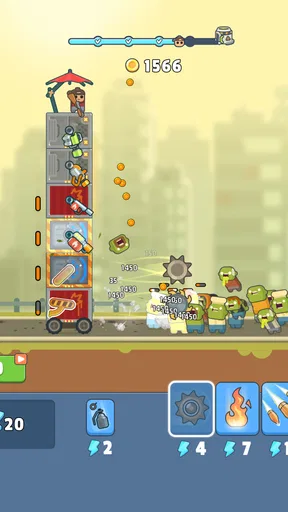
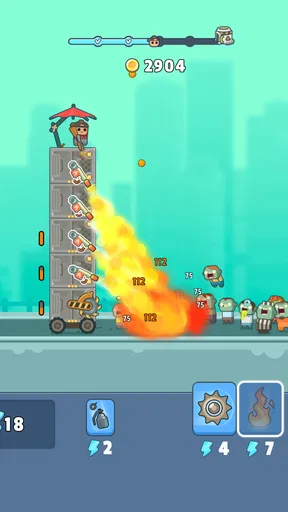
Our Review of TDS - Tower Destiny Survive
 Analysis by Appyee
I tend to judge a free action game by a simple question: does it give me a satisfying reason to come back without making every session feel like a chore? TDS - Tower Destiny Survive caught my attention because its premise points straight to a clear loop: prepare a tower, improve your setup, then see how well it holds against a crowd of zombies. That combination is easy to understand, but the appeal depends on whether building and upgrading stays engaging once the first novelty wears off.
What the free entry does—and does not—tell you
The game is free to download, which makes trying it a low-commitment choice. It is an action game from SayGames Ltd, and the age rating is Everyone 10+. The current version is 1.11.0, with Android support from OS 8.0. Those details make it easier to decide whether it fits your device and household, but the practical value still comes down to whether you enjoy its particular take on defending against zombie waves.
There are in-app purchases, with individual items priced from $0.99 to $99.99. I would treat that range as a reason to check each purchase carefully rather than assume that spending is needed to enjoy the game. Free access and paid options are different things: you can start without paying, while the listed item range alone does not tell you what any purchase contains or whether it meaningfully changes progression.
That distinction matters if you are choosing a game for a short break or for a younger player. I would begin by playing at no cost and deciding whether the basic rhythm is enjoyable before considering any optional purchase. If you do spend, make the decision based on the specific item and your own budget, not on the idea that paying is automatically required to make progress.
Gameplay That Keeps You Engaged
First things first, the gameplay in TDS - Tower Destiny Survive is absolutely enthralling. You start off in a seemingly simple world, but as you progress, the complexity ramps up in the best way possible. The game challenges you to strategize on the fly, placing towers to fend off waves of enemies. And trust me, these aren't your typical run-of-the-mill opponents.
The variety in enemy types forces you to adapt your strategies constantly. One moment you're dealing with fast, sneaky critters, and the next, hulking beasts that take considerable firepower to bring down. It's a delightful challenge that keeps you coming back for more. The satisfaction of clearing a tough level with your carefully curated tower setup is unbeatable.
Why the build-and-upgrade loop can work in short sessions
The appeal of this kind of defense game is that each run gives you a compact problem to solve: what is threatening your setup, and what change might keep the next wave from overwhelming it? I find that structure useful when I want an activity with a clear focus instead of a sprawling world to explore. The payoff is immediate enough to understand—your decisions are tested by incoming enemies—while still leaving room to adjust your approach on another attempt.
A useful habit is to treat a failed push as information rather than as a cue to repeat the same choices. Notice whether the defense seems to struggle with speed, durability, or simply too many enemies arriving together. Then make one deliberate adjustment on the next attempt, if the game gives you the opportunity. Changing one part at a time makes it easier to tell what helped; changing everything at once can make a better result hard to learn from.
That small, practical loop is also why I would not recommend rushing through every decision. If you are playing in a spare moment, it is tempting to tap quickly and let the action carry you. But a few seconds spent considering what your current setup is missing can make the session feel more like strategy and less like watching a wave of enemies decide the outcome for you.
Graphics and Sound That Enhance the Experience
Let's dive into the aesthetics for a moment. Visually, TDS is a treat. The graphics are sharp and vibrant, making every level a visual delight. Each tower and enemy type is beautifully designed, ensuring that you never lose track of what's happening on the battlefield.
The sound design is another aspect I can't praise enough. The background music is perfectly balanced – not too distracting but still engaging enough to keep your blood pumping. The sound effects of towers firing and enemies exploding add an extra layer of satisfaction, making each victory feel earned.
Where its action focus differs from other tower defense games
Compared with slower, more planning-heavy tower defense games, the zombie-wave framing makes this one sound suited to players who want pressure and visible action alongside their decisions. I like that emphasis when I am in the mood to react and refine a defense, rather than spend a long time studying a map before anything happens. If you usually prefer elaborate level layouts, intricate menus, or a campaign built around lengthy strategic planning, a more traditional tower defense title may suit you better.
It is also a different fit from action games that put most of their attention on direct character control. Here, the main appeal is the defensive setup and its ability to handle the incoming crowd, not simply reflexes or aiming. That makes it a reasonable middle ground for someone who likes action but wants decisions about preparation to matter too. The trade-off is that anyone seeking a deep simulation of battlefield tactics may find this style comparatively immediate.
Strategic Depth and Replayability
What I love most about TDS is the strategic depth it offers. You're not just placing towers and hoping for the best. Each tower has unique abilities and upgrade paths, allowing you to tailor your defense to suit your playstyle. Whether you prefer heavy firepower or slowing down enemies with tactical traps, the choice is yours.
And let's talk about replayability. The game offers various difficulty modes and special challenges that test your skills in new and exciting ways. Even after completing the main levels, there's always something fresh to dive into. It's one of those games where you can easily lose track of time, replaying levels to perfect your strategy.
Small choices that make a run more useful
One approach I find helpful in a tower-focused game is to avoid treating upgrades as an automatic reward to claim without thought. Consider what role a tower is playing in your current defense, then decide whether improving that role addresses the problem you have actually seen. If the issue is a difficult enemy, more of the same may not be as useful as a setup that handles a different weakness. The point is not to chase a supposedly perfect build; it is to make each choice answer a real problem in the run.
Replayability is most valuable when a retry has a purpose. Before restarting, I would pick a single thing to test: a different emphasis in the defense, a change in when I upgrade, or a more patient response to an early threat. That turns a repeated level into a small experiment rather than a grind. It is a practical way to decide whether the game’s strategic layer is satisfying for you, especially if you are still learning what different tower choices contribute.
For an everyday example, this is the sort of game I would open while waiting for a ride or taking a short break, provided I had enough uninterrupted time to finish the immediate stretch I was playing. If I knew I might have to put my phone down at any second, I would avoid starting a demanding run and choose something easier to pause instead. That is not a criticism unique to this game; it is a sensible way to match a wave-based challenge to the time you actually have.
Intuitive Controls and User-Friendly Interface
Nothing ruins a good game faster than clunky controls. Thankfully, TDS nails this aspect. The controls are intuitive, allowing you to place and upgrade towers with ease. The user interface is clean and straightforward, making it easy to navigate through different options and manage your resources efficiently.
Even if you're new to tower defense games, the learning curve here is gentle enough to ease you in without overwhelming you. Yet, it offers enough complexity to keep seasoned players engaged. It's a balance that few games manage to achieve, and TDS does it beautifully.
Who is likely to get the most from it
I would point this toward players who like watching a plan meet a hectic situation, then making a sharper plan on the next attempt. Newcomers can approach it through the simple idea of building a defense against waves, while people already familiar with tower defense can look for satisfaction in adjusting their setup and taking on tougher challenges. The game’s 4.5 average rating, drawn from around 256,000 ratings, suggests it has found a broad audience, though a high average cannot guarantee that its style will suit every player.
Its reach is substantial, with over 10 million installs, and it has received around 6,100 written reviews. I see those figures as signs that plenty of people have tried it, not as a substitute for deciding whether zombie-wave defense is your thing. If you like short, readable objectives and the tension of holding a line, it is a sensible free game to sample. If you dislike repeating a challenge to improve a result, the same loop may start to feel demanding rather than rewarding.
I would also skip it if your main priority is a story-led adventure, a quiet puzzle experience, or a game where every session can be abandoned without concern. The core pitch is about preparing for crowds and surviving pressure, so someone looking for a very different mood should choose a game built around that preference instead. Likewise, players who want to know exactly what paid items provide before they begin should inspect the purchase choices in the game rather than infer their value from the price range.
The Community and Updates
Another thing worth mentioning is the active community and regular updates. The developers are clearly passionate about the game, frequently releasing new content and improvements. It's refreshing to see a game where the creators listen to player feedback and work to enhance the experience continually.
Joining the community forums and discussions is a great way to share strategies, learn tips, and connect with fellow players. It's always fun to see how others tackle the same challenges and to pick up new ideas for your next playthrough.
How I would decide whether to keep playing
Because the game is free to start, I would use the early sessions as a personal test rather than set a spending plan in advance. Ask yourself whether you enjoy choosing how to strengthen a tower, responding when a defense is under pressure, and trying again with a more considered setup. If those decisions feel rewarding even when a run does not go smoothly, there is a good reason to keep it installed. If the appeal fades as soon as you meet resistance, paying for an item is unlikely to fix a mismatch in taste.
One question people often have about a free game with purchases is whether it is worth trying without buying anything. In my view, yes: the no-cost entry makes it easy to find out whether the central play style works for you, while purchases remain a separate choice. Another practical question is whether it suits someone new to tower defense. The straightforward premise and accessible controls make it approachable, although newcomers still need to enjoy learning from setbacks rather than expect every setup to succeed immediately.
It is also worth being clear about what kind of alternative to choose if the game is not clicking. For more deliberate planning, look for a tower defense game that emphasizes map choices and slower decisions; for a lighter break, a casual puzzle game may be a better match. If you want direct combat to be the main activity, choose an action title centered on controlling a character. Those alternatives are not necessarily better overall—they simply put their emphasis elsewhere than this game’s tower preparation and zombie pressure.
A measured verdict on its value
In conclusion, TDS - Tower Destiny Survive is a gem in the tower defense genre. It's engaging, visually appealing, and offers a depth of strategy that's both challenging and rewarding. Whether you're a seasoned tower defense veteran or a newcomer looking for a fun and strategic experience, TDS is well worth checking out. Just be prepared to lose track of time as you get lost in its captivating world.
My recommendation is to try it if a free action game built around defending against zombie waves sounds appealing, then judge the value by how much you enjoy the decisions it asks you to make. The purchase range runs from $0.99 to $99.99 per item, so I would not treat every paid option as automatically worthwhile; consider an item only if its stated contents make sense to you and fit your budget. For me, the best reason to play is the chance to build, observe, and adjust—not the promise of buying a shortcut. If that loop sounds fun, give it a try. If you want a slower, story-focused, or purely reflex-based experience, your time is probably better spent elsewhere.
Verdict
Strengths of TDS - Tower Destiny Survive
- Engaging gameplay with strategic depth.
- Visually stunning graphics and effects.
- Regular updates add new challenges.
- User-friendly interface with intuitive controls.
- Offline mode available for uninterrupted play.
Limitations of TDS - Tower Destiny Survive
- In-app purchases can be pricey.
- Some levels feel repetitive over time.
- Occasional lag on older devices.
- Limited customization options for towers.
- Ads can be intrusive during gameplay.
Other Releases by SayGames Ltd
View All
Turbo Stars - Rival Racing
Racing4.6

Johnny Trigger: Action Shooter
Action4.6

DOP 4: Draw One Part
Puzzle4.4

DOP: Draw One Part
Puzzle4.4
Similar Picks in This Category
View All
Temple Run 2: Endless Escape
Imangi Studios4.1

PUBG MOBILE
Level Infinite4.3

Free Fire: 9th Anniversary
GARENA INTERNATIONAL I4.4

Talking Tom: Hero Dash Run
Outfit7 Limited4.3

slither.io
Lowtech Studios3.9

Sniper 3D:Gun Shooting Games
Wildlife Studios4.6
Frequently Asked Questions
What is the main objective of TDS - Tower Destiny Survive?
TDS - Tower Destiny Survive is a strategic tower defense game where the main objective is to protect your kingdom from waves of enemies. By strategically placing towers and upgrading them, players must prevent foes from breaching their defenses. The game combines elements of strategy, resource management, and quick decision-making to offer a challenging experience.
Is TDS - Tower Destiny Survive free to play?
Yes, TDS - Tower Destiny Survive is free to download and play. However, it offers in-app purchases that allow players to buy resources, special towers, or other enhancements that can aid in progressing through tougher levels. The game is designed to be enjoyable without spending money, but these purchases can provide an edge.
What platforms is TDS - Tower Destiny Survive available on?
TDS - Tower Destiny Survive is available for both Android and iOS devices. You can download it from the Google Play Store for Android or the Apple App Store for iOS. The game is optimized for mobile devices, ensuring smooth gameplay and intuitive controls across various screen sizes.
Does TDS - Tower Destiny Survive require an internet connection?
TDS - Tower Destiny Survive can be played offline, making it perfect for on-the-go gaming without worrying about data usage. However, an internet connection is required for downloading updates, accessing certain features like leaderboards, or making in-app purchases. Playing offline won't limit your core gaming experience.
Are there any age restrictions for TDS - Tower Destiny Survive?
TDS - Tower Destiny Survive is rated for players aged 10 and up. The game contains mild cartoon violence as you defend against enemy attacks, but it is generally suitable for younger audiences. Parents should review the game content and in-app purchase options to ensure it aligns with their preferences for their children.
Play our best games!


